


Idlib Governorate Sets Olive Pressing Wages for 2026 Season by Official Decree
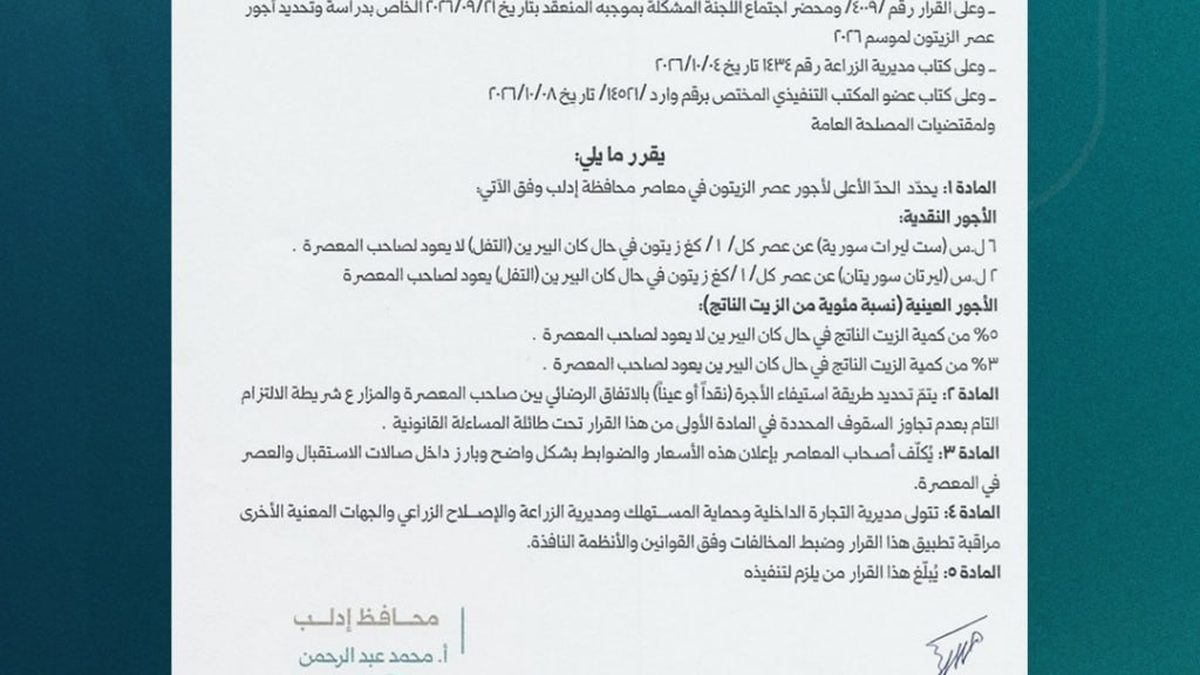
Idlib Governorate in northwest Syria has issued an official decree setting olive pressing wages across the province for the 2026 season, aiming to regulate dealings between farmers and press owners before the harvest begins.
Key points
- Idlib Governorate issued a decree setting olive pressing wages for 2026.
- The decision regulates relations between farmers and olive press owners in the province.
- Specific wage figures were not included in the available announcement.
- Olives are a staple crop and income source in northwest Syria.
What does Idlib's olive pressing wage decree cover?
The governorate of Idlib, in northwest Syria, announced an official decree setting the wages charged for pressing olives at mills across the province for the 2026 season. The announcement comes ahead of the olive harvest and pressing season, when large numbers of farmers take their crops to presses to produce olive oil, a staple food and a key source of income for households in the region.
Setting wages by governorate decree is intended to establish a clear reference that press owners must follow, preventing large price differences from one mill to another and protecting both sides of the transaction: the farmer who owns the crop and the mill owner whose facility depends on the season.
Why does fixing pressing wages matter in Syria?
Olive growing is one of the most important agricultural activities in northwest Syria, and Idlib is a major olive-producing province. Thousands of families rely on the annual harvest both as food stock — olive oil stored for the year — and as a source of cash income from selling surplus oil.
In past seasons, differing pressing fees between mills have been a recurring source of disputes between farmers and press owners, especially in years of poor harvests. A province-wide wage schedule gives both parties a common reference point, reducing conflict and clarifying obligations before work begins. For readers unfamiliar with the system, farmers in Syria traditionally pay mills a fee — sometimes in oil, sometimes in cash — rather than a fixed price.
What does this mean for Syrians?
For farmers and press owners in Idlib, the decree means an official wage schedule exists that can be cited in dealings and disputes. The specific figures were not included in the announcement, and those concerned should consult the governorate or the official text of the decree for the exact rates.
For residents and members of the Syrian diaspora tracking the local economy, the decree signals the formal start of organizing the 2026 olive season, a factor that typically influences the local supply and pricing of olive oil in the months ahead.
Frequently asked questions
What is Idlib's olive pressing wage decision?
It is an official decree issued by Idlib Governorate setting the wages that olive presses in the province may charge for pressing olives during the 2026 season, in order to regulate dealings between farmers and mill owners.
Who issued the olive pressing wage decree in Idlib?
The governorate of Idlib itself — the official administrative authority for the province in northwest Syria — issued the decree, as governorates are typically responsible for regulating local economic activities.
When does the olive pressing wage decree apply?
It applies to the 2026 olive season. Such decrees are usually issued before the harvest begins, so a clear wage reference is in place before farmers start delivering their crops to presses.
Where can the exact wage figures be found?
The specific figures were not included in the available announcement. Farmers and press owners should check the official text of the decree or contact the relevant departments in Idlib Governorate.
More news
Live buy, sell and mid rates, measured and published by SYPNow.
SYPNow reports news from the sources it names. Exchange rates quoted anywhere on this site come from SYPNow's own measurement, never from a third-party bulletin.