


Syria Central Bank Signs Banking Cooperation MOU With UAE Counterpart
Central Bank of Syria Governor Safwat Raslan and UAE Central Bank Governor Khaled Mohamed Balama signed a memorandum of understanding to strengthen financial, regulatory and technical cooperation, covering payments, monetary policy, fintech and financial inclusion.
This article is shown in English; SYPNow publishes its newsroom in Arabic and English only.
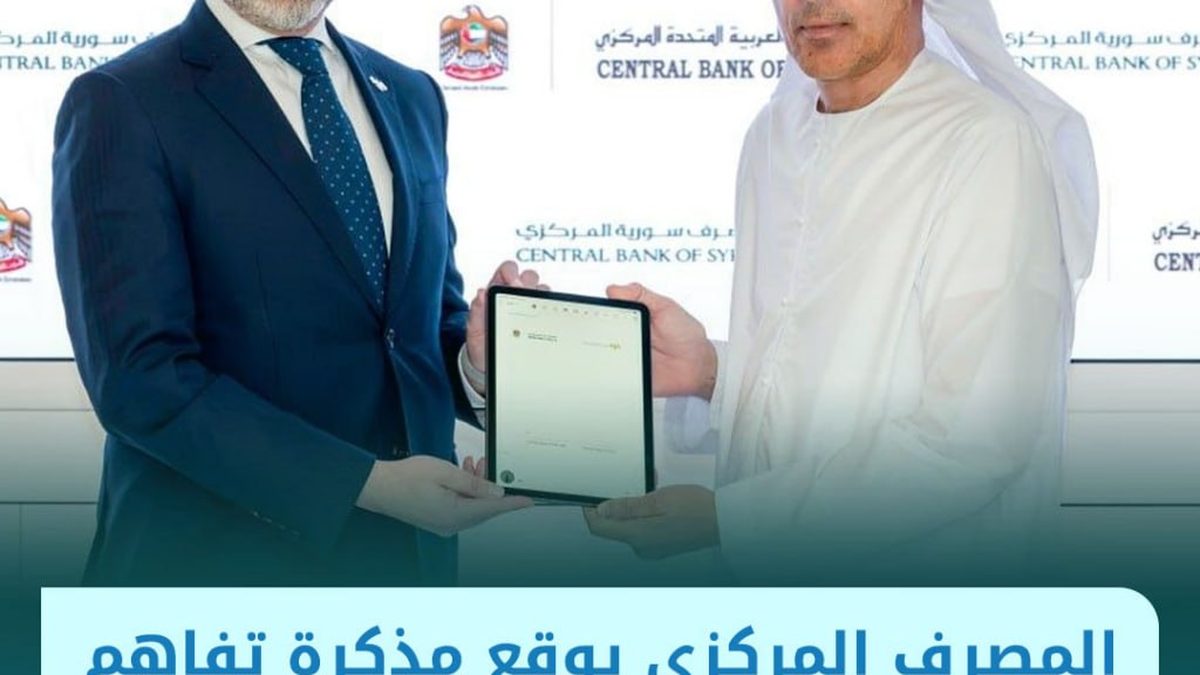
Key points
- The Central Bank of Syria and the UAE Central Bank signed a cooperation MOU.
- It covers payment systems, monetary policy and financial technology.
- Sustainable finance, financial inclusion and consumer protection are also included.
- The MOU is a cooperation framework; no immediate implementing measures were announced.
What Does the Syria-UAE Banking MOU Cover?
Central Bank of Syria Governor Safwat Raslan and UAE Central Bank Governor Khaled Mohamed Balama signed a memorandum of understanding to enhance cooperation between the two institutions in areas of mutual financial, regulatory and technical interest. Syria's banking sector spent years cut off from international financial networks, and a formal link with one of the region's leading central banks marks a notable institutional step for Damascus.
- Payment systems
- Monetary policy
- Financial technology
- Sustainable finance
- Financial inclusion and consumer protection
Why Does UAE Banking Cooperation Matter for Remittances?
The UAE is home to a large Syrian expatriate community, making the UAE Central Bank a key counterpart for money-transfer channels between the two countries. Cooperation on payment systems and financial technology is therefore directly relevant to how remittances flow to Syrian households. Central bank MOUs typically serve as frameworks for knowledge exchange and policy coordination, preceding any concrete operational steps.
What Does This Mean for Syrians?
In the immediate term, the MOU does not change banking services or transfers; no implementing measures were announced alongside the signature. Over time, however, the institutional partnership could support the development of payment systems and broader financial inclusion — areas that directly affect Syrians inside the country and the diaspora whose families rely on their remittances.
What Are the Limits of the Agreement?
An MOU is a statement of intent, not an executable deal: concrete steps such as linking payment infrastructures would require detailed follow-up agreements. According to the Syrian central bank's announcement, the memorandum spans several policy areas, but any practical measures will depend on subsequent institutional work between the two banks.
Frequently asked questions
What is the Syria-UAE central bank MOU?
It is a cooperation memorandum signed by Central Bank of Syria Governor Safwat Raslan and UAE Central Bank Governor Khaled Mohamed Balama, covering payment systems, monetary policy, financial technology, sustainable finance, financial inclusion and consumer protection.
Will the MOU immediately affect money transfers?
No immediate implementing measures have been announced. The MOU is a general cooperation framework; any practical effect on transfers and payment systems would require follow-up operational steps between the two banking systems.
Who signed the Syrian-Emirati banking MOU?
Central Bank of Syria Governor Safwat Raslan signed it with UAE Central Bank Governor Khaled Mohamed Balama. It covers areas of mutual financial, regulatory and technical interest between the two central banks.
How does the MOU relate to financial inclusion?
Financial inclusion and consumer protection are explicitly listed in the memorandum, alongside sustainable finance and financial technology — areas concerning broader access to banking services for individuals.
More news
Live buy, sell and mid rates, measured and published by SYPNow.
SYPNow reports news from the sources it names. Exchange rates quoted anywhere on this site come from SYPNow's own measurement, never from a third-party bulletin.