


Syrian Apple Farmers in Zabadani Demand Import Ban as Prices Collapse
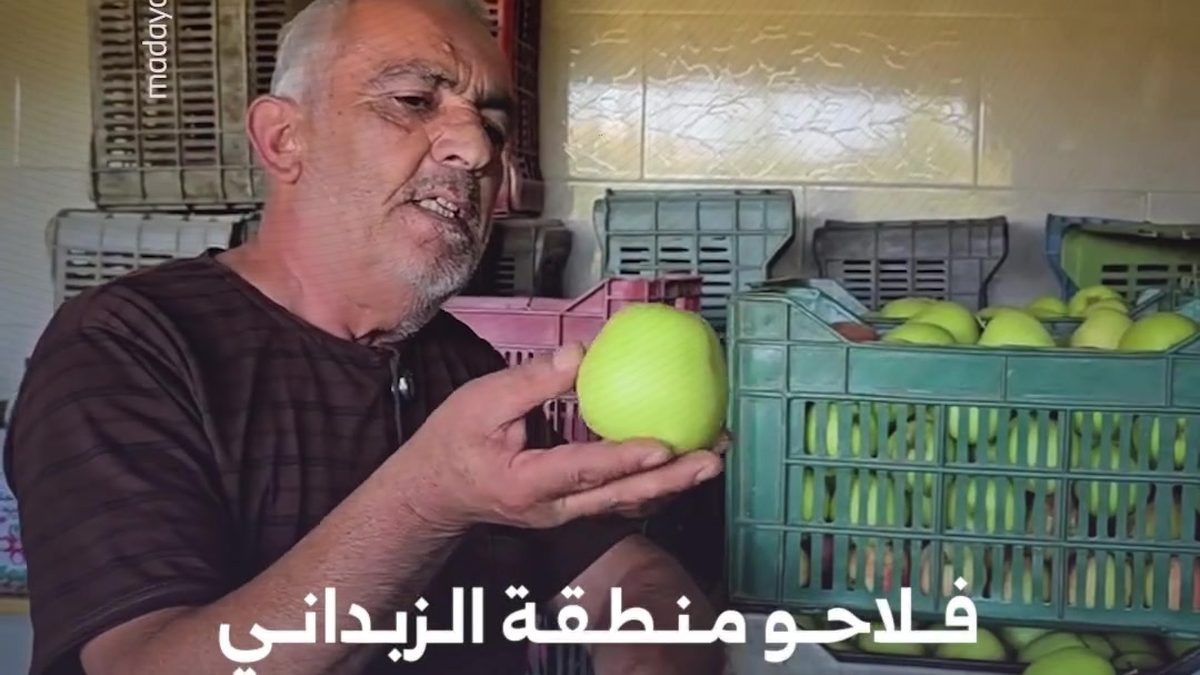
Apple farmers in the Zabadani region — including Serghaya, Madaya and Ain Hor west of Damascus — are demanding a ban on imported apples after local prices collapsed, Syrian state-affiliated broadcaster Syria TV reported, though no official decision has been issued.
This article is shown in English; SYPNow publishes its newsroom in Arabic and English only.
Key points
- Farmers in Zabadani, Serghaya, Madaya and Ain Hor are seeking protection for their apple harvest.
- Their demand follows a collapse in local apple prices this season.
- The core demand is to stop foreign apples from entering Syrian markets.
- No official decision to restrict apple imports has been issued so far.
- Apple growing is a key source of income for families in rural Damascus.
Why are Zabadani farmers demanding an apple import ban?
Farmers across the Zabadani area — the towns of Serghaya, Madaya and Ain Hor west of Damascus — are calling for foreign apples to be kept out of Syrian markets after a season in which the price of their crop collapsed. In a video published by Syria TV, one farmer said foreign apples "must not enter the market," voicing the frustration spreading among growers in the region.
The area is one of Syria's known apple-growing belts, and the harvest is a primary source of income for many families there who depend on the autumn season. A sharp price drop therefore strikes directly at farmers' ability to cover the costs of picking, packing and transport.
What does a price collapse mean for the farmers?
When the farm-gate price of a crop collapses, farmers often receive less than their production costs, forcing them to sell at a loss or leave part of the harvest unpicked. Apples in particular require continuous spending on pruning, spraying and irrigation long before the fruit reaches the consumer.
Growers fear that the availability of imported apples on the market increases overall supply and weakens demand for their local product — the reasoning behind their call for restrictions until the domestic crop is sold.
Has Syria officially banned apple imports?
As of the date of this report, no official decision has been issued by the relevant authorities to ban or restrict apple imports. The demand remains a grassroots appeal expressed by farmers through the media rather than a policy adopted by any government body.
In comparable situations, governments typically consider tools such as customs duties or temporary import bans to shield domestic produce during its season. Any such step, however, would require a formal decision that has not yet materialized.
What does this mean for Syrians?
For consumers, imported apples mean wider choice and potentially competitive prices. For local farmers, they represent direct competition that can wipe out their ability to sell the harvest. This tension between consumer and producer interests lies at the heart of the debate over agricultural import policy.
For the thousands of families who rely on apple growing around Zabadani, the current season is a real test of whether their farming livelihoods remain viable, and many are waiting to see whether the government responds to their appeal.
Frequently asked questions
Why do Syrian farmers want to ban imported apples?
Because local apple prices collapsed this season, and farmers believe the availability of foreign apples on the market reduces demand for their harvest, deepening their losses.
Which areas are demanding protection for their apple crop?
Farmers in Zabadani, Serghaya, Madaya and Ain Hor, all located west of Damascus in an area known for apple cultivation in Syria.
Has Syria officially banned apple imports?
No. As of this report no official decision to ban or restrict apple imports has been issued; the demand is a grassroots appeal made by farmers through the media.
How do imported apples affect Syrian farmers?
They increase market supply and push down local prices, which may no longer cover production costs such as irrigation, spraying, picking, packing and transport.
More news
Live buy, sell and mid rates, measured and published by SYPNow.
SYPNow reports news from the sources it names. Exchange rates quoted anywhere on this site come from SYPNow's own measurement, never from a third-party bulletin.