


Syrian Energy Minister Proposes Customs Exemption for Solar Panels and Lithium Batteries
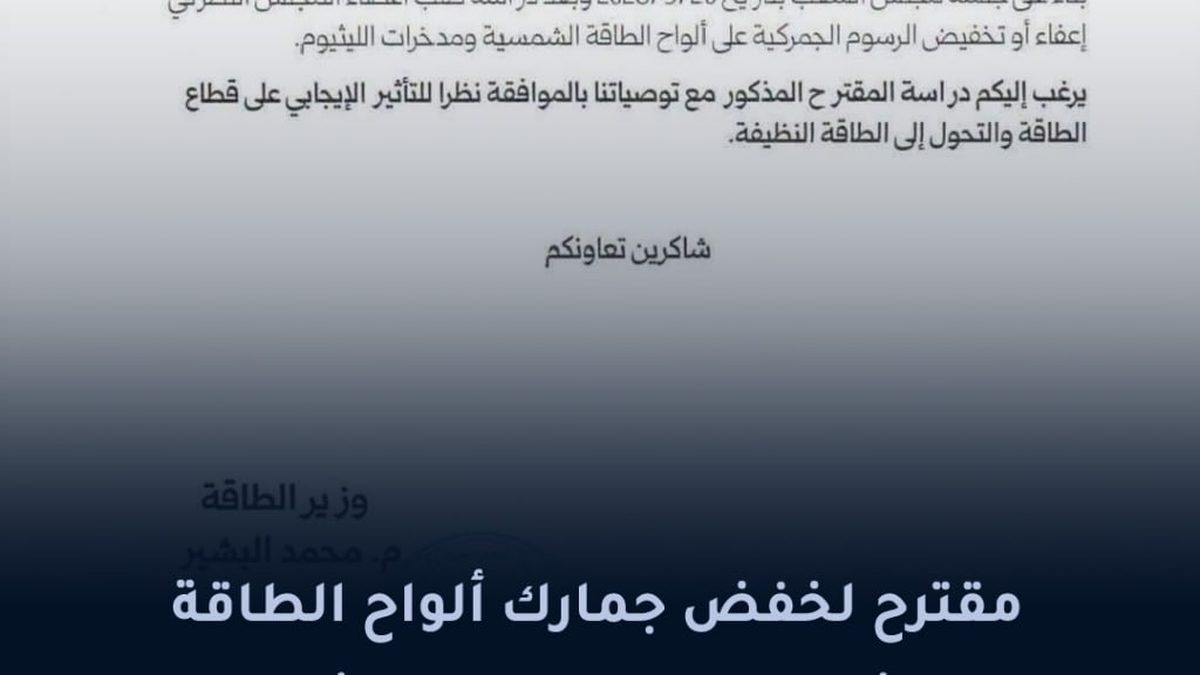
Syria's Energy Minister Mohammed al-Bashir has sent a proposal to the General Authority for Ports and Customs to exempt or reduce customs duties on imported solar panels and lithium battery storage. The proposal remains under study and no binding decision has been issued yet.
This article is shown in English; SYPNow publishes its newsroom in Arabic and English only.
Key points
- Energy Minister Mohammed al-Bashir sent the proposal to the General Authority for Ports and Customs
- It covers exempting or reducing customs duties on solar panels and lithium battery storage
- No binding decision has been issued and no exemption rate has been announced
- Lower duties could reduce the cost of home solar systems in Syria if adopted
What does the solar panel customs exemption proposal include?
Information attributed to the Ministry of Energy indicates that Minister Mohammed al-Bashir has formally proposed to the General Authority for Ports and Customs the exemption or reduction of customs duties imposed on imported solar panels and lithium battery storage units. The proposal is still at the study stage within the customs authority; no specific exemption or reduction percentage has been announced, and no binding decision has been issued so far.
If adopted, the measure would allow imports of solar panels and batteries to enter the Syrian market at a lower cost, which typically translates into lower retail prices for end consumers. With frequent power outages across the country, solar energy has become an essential option for many Syrian households running lighting and basic home appliances.
Why do lithium batteries and solar power matter in Syria?
Lithium battery storage units are rechargeable batteries used to store electricity generated by solar panels during the day for use at night or during outages. They are a core component of any complete home solar system and represent a substantial share of the total system cost, largely due to import prices.
Customs duties are added to the import cost before products reach the local market. Any reduction in these duties opens the way for lower final prices for users, whether families installing systems for the first time or those needing to replace aging batteries. Syria's electricity crisis has pushed large numbers of households toward solar as a substitute for unreliable grid supply.
What does this mean for Syrians at home and abroad?
The key point for Syrian households is distinguishing between a proposal and a decision. The ministerial proposal is not an enforceable regulation, and it cannot be relied upon when calculating import or purchase costs until an official decision is issued by the competent authorities and published.
Those planning to install a solar system are advised to follow official decisions issued by the General Authority for Ports and Customs before making purchase or import decisions, since any change in duties directly affects the final cost of equipment and components. Syrians abroad who send money home for such purchases face the same uncertainty until the rules are finalized.
Frequently asked questions
Has Syria exempted solar panels from customs duties?
Not yet. What has been reported is a proposal sent by Energy Minister Mohammed al-Bashir to the General Authority for Ports and Customs to exempt or reduce duties on solar panels and lithium battery storage. It remains under study, and no binding decision has been issued.
Who proposed reducing customs duties on lithium batteries in Syria?
Energy Minister Mohammed al-Bashir submitted the proposal to the General Authority for Ports and Customs. It covers exempting or reducing customs duties on imported lithium battery storage units and solar panels.
When will the solar panel customs exemption take effect in Syria?
There is no set date. The proposal is still with the customs authority and has not become an official decision. Implementation would begin only after a binding decision is officially issued specifying the exemption or reduction rate.
More news
Live buy, sell and mid rates, measured and published by SYPNow.
SYPNow reports news from the sources it names. Exchange rates quoted anywhere on this site come from SYPNow's own measurement, never from a third-party bulletin.